





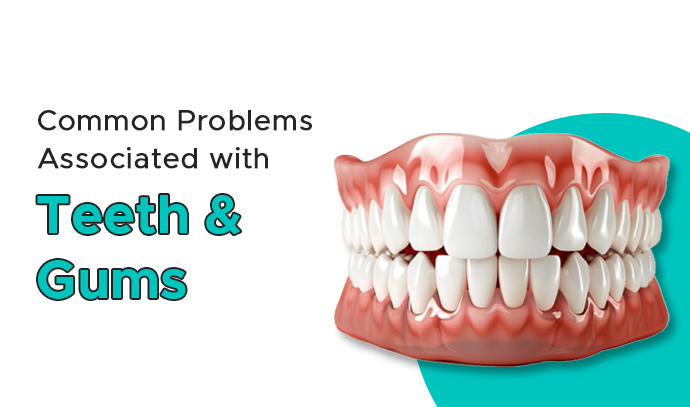
Common Problems Associated with Teeth and Gums
Is it serious, or can it wait? That’s what most people ask when they notice bleeding gums, a sensitive tooth, or breath that won’t go away no matter how much they brush.
Most common problems associated with teeth and gums start small. A cavity that is painless or gum disease that begins as a little bleeding. By the time there’s real pain, the easy fix treatment window is gone.
Elite Dental Studio an ISO certified dental chain, each problem from early cavities to advanced gum disease is handled by a specialist dentist. Periodontists, restorative specialists, endodontists, and oral surgeons are available on site every day, so no referrals are made to outside clinics.
What Are the Most Common Teeth Problems That People Experience?
There are four most common teeth problems including cavities, sensitivity, erosion, and dental abscess. Most of these start without any pain and thus people miss them.
-
Tooth Decay (Cavities)
A cavity doesn’t hurt at first, because bacteria feed on sugar and produce acid. That acid eats through the enamel, the outer layer of the tooth, slowly and silently.
By the time you feel it, the cavity has already gone deeper into the pulp where the nerve sits. That’s when a filling turns into a root canal.
-
Tooth Sensitivity
Cold water or sweet food triggers a sharp zing. It fades in a second, so most people assume it’s normal. It isn’t.
Sensitivity means the protective outer layer of the tooth has thinned. Underneath that layer are tiny channels that lead straight to the nerve. When enamel wears away, temperature and sugar travel down those channels and the nerve responds.
It usually means enamel wear, an early cavity, or receding gums.
-
Tooth Erosion
Erosion looks like decay but comes from a completely different place. Bacteria cause decay. Acid causes erosion. Fizzy drinks, citrus fruit, and stomach acid from reflux are the main sources.
The surface of the tooth dissolves gradually. Teeth start looking yellower because the darker layer underneath begins to show through. Edges get thinner. Chips happen more easily.
An abscess is a pocket of infection. Throbbing pain, swelling around the jaw or face, a bad taste in the mouth, sometimes a fever. This is the problem that can’t wait.
What Are the Most Common Gum Problems and How Do They Progress?
Gum problems follow a clear path: plaque builds up, the gums get inflamed, infection sets in, then bone starts to go. Each stage is harder to reverse than the one before it.
-
Gingivitis
Gums that look a bit red or bleeding when you brush. Most people think they must have brushed too hard. But that’s not always true. That’s gingivitis.
The gums are reacting to bacteria in the plaque sitting at the gumline. The good news: at this stage, it’s completely reversible. A professional clean removes the plaque and tartar causing it.
-
Periodontitis
This is what gingivitis becomes when nobody deals with it. The infection moves below the gumline. It starts breaking down the bone and tissue that hold the teeth in place. Periodontitis is also linked to heart disease, diabetes complications, and pregnancy risks. The bacteria enter the bloodstream through infected gum tissue. This is the outcome of ignoring bleeding gums long enough.
-
Gum Recession
Gum recession happens slowly, from gum disease, brushing too hard with a firm brush, or genetics. Most people notice it when the sensitivity starts. The gums pull back from the teeth, exposing the roots.
Roots have no enamel protecting them. They’re sensitive, they decay more easily, and teeth start to look longer than they used to.
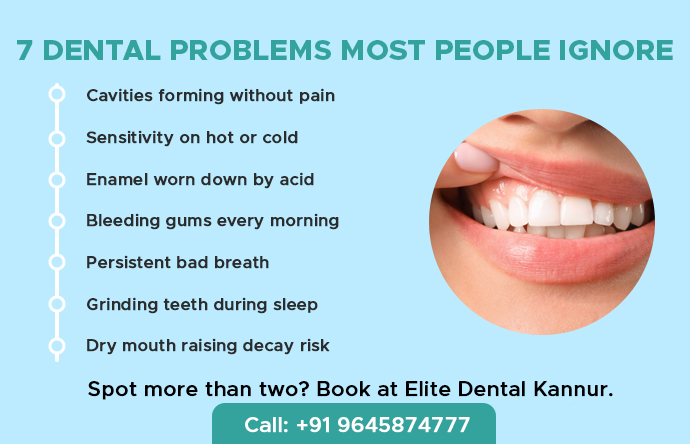
What Other Dental Problems Are Associated with Teeth and Gums?
Teeth grinding, bad breath and dry mouth are the m,ost common 3 conditions that affect a lot of people, often for years, without anyone connecting them to a dental cause.
-
Bad Breath (Halitosis)
Mouthwash helps for an hour. Then the bad breath is back. It doesn’t fix the source.
Bad breath comes from two places. The first is bacteria on the tongue and between teeth breaking down food. The second is active gum disease, where infected tissue produces a constant smell.
-
Bruxism (Teeth Grinding)
Most people who grind their teeth at night don’t know they do it. They find out when a dentist notices the wear patterns: flat biting edges, small chips, enamel worn thin where grinding happens.
By then, months of enamel are already gone. Enamel doesn’t come back.
-
Dry Mouth (Xerostomia)
Saliva does more than keep the mouth comfortable. It neutralises acid, clears food particles, and delivers minerals that protect enamel. Without enough of it, teeth and gums become much more vulnerable to decay and infection.
The most common cause is medication. Antihistamines, antidepressants, and blood pressure drugs are the usual culprits.
Which Symptoms of Teeth and Gum Problems Should You Never Ignore?
Six signs that mean a visit to the best dental clinic in Kannur this week, are:
- Swelling around a tooth or jaw
- Gums that bleed every time you brush
- Pain when biting
- A tooth that feels loose
- Sensitivity that lingers after the trigger is gone
- Visible pus or a bump on the gum
Go in within 48 hours. Most people with serious dental problems say the same thing when they finally come in: they noticed something weeks ago and waited. The condition that was a filling then is a root canal now.
How Can You Prevent Common Teeth and Gum Problems Before They Start?
Most common teeth and gum problems are preventable with just 4 habits, done consistently, before they need treatment. These are:
- Brush twice a day with fluoride toothpaste. Two minutes each time.
- Floss every day. One minute of flossing removes the plaque that causes most gum problems.
- Cut down how often you have sugar or fizzy drinks. Frequency matters more than quantity.
- Get a professional clean every six months. A clean catches early decay before it needs anything more than a small filling.
Book Your Appointment at Elite Dental Studio Kannur
If any of these dental problems sounds familiar, earlier is better. A cavity caught today is a 20-minute filling. The same cavity in three months may need a root canal.
At Elite Dental Studio, a dental clinic in Kannur uses an intraoral camera that shows you exactly what the dentist sees, on screen, in real time. Dr. Akash K Babu, MDS Periodontics and Laser Specialist, handles gum disease cases using BioLase laser treatment, providing less discomfort, faster healing, and no scalpel for most soft tissue procedures. In-house OPG digital radiography means full-mouth X-rays are also done on the same visit.
Since 2020, Elite Dental Studio has treated over 100,000 patients across Calicut, Kochi, Kannur, and Coimbatore. To get a full clinical examination done call: +91 9645874777
Frequently Asked Questions
What causes gums to bleed every time I brush my teeth?
Bleeding gums are the first sign of gingivitis, an inflammation caused by plaque at the gumline. It’s not from brushing too hard. At this stage it’s fully reversible. Left alone, it progresses to periodontitis, where the bone loss is permanent.
Is tooth sensitivity always a sign of a serious dental problem?
Tooth sensitivity is always a signal. Brief sensitivity on cold or sweet food usually points to enamel wear or an early cavity. That needs a clinical check.
Can early-stage gum disease be reversed without treatment?
Gingivitis is fully reversible with a professional clean up and home care. But periodontitis, where bone loss has started, is not reversible. The Treatment can only stop the further damage .
How do I know if I have a dental abscess or just a toothache?
A toothache is pain in a tooth. An abscess involves infection: throbbing pain, visible swelling of the face or gum, fever, foul taste. If two or more of those are present alongside the pain, go in within 48 hours.
How often should I visit the dentist if my teeth feel fine?
Every six months. Cavities and early gum disease are both painless at the start. By the time something hurts, what was a simple fix is usually a significant one.
Have Dental Problem : Call us
CALICUT: +91 9745 072 555,
KOCHI: +91 9567 124 888
KANNUR: +91 9645874777
COIMBATORE: +91 9633694999
or make an Appointment
Take a smiling selfie and we'll Simulate your new smile See What Invisalign treatment could do for you!