





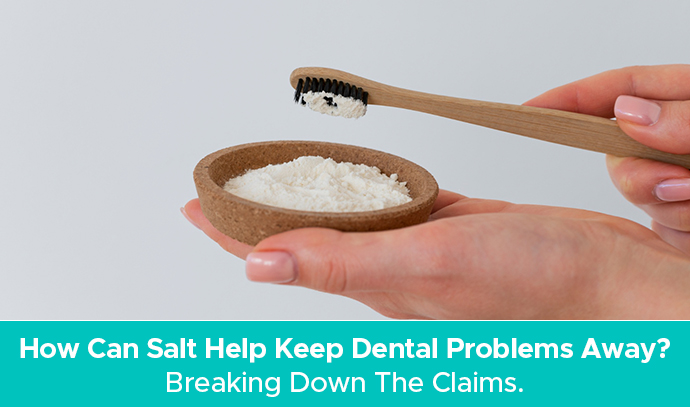
How Can Salt Help Keep Dental Problems Away? Breaking Down The Claims.
DIY home remedies have made salt water sound like a full fix for dental problems. When your gums feel sore or mouth tastes odd, it is tempting to rinse and move on. Many people do that, but feel shocked when bleeding, sensitivity, or swelling continues.
Salt supports oral comfort and basic hygiene but as a short-term habit, and cannot replace brushing, flossing, or dental treatment. Elite Dental Studio suggests salt-water rinses as supportive care, but not as a primary treatment.
If you want a safe dental plan in Kannur, Elite Dental Studio offers gum checks, professional cleaning, cavity evaluation, and pain assessment using top-class advancements and modern pain-management technology. In this guide, you will discover the truth how salt keep dental problems away, what it helps, what it cannot fix, how to rinse safely, and when to see a dentist.
Does Salt Help With Dental Problems Or Is It Just A Myth?
Salt can help with short-term soothing and hygiene support, but it does not remove plaque or treat cavities. When people say salt helps dental problems they mean:
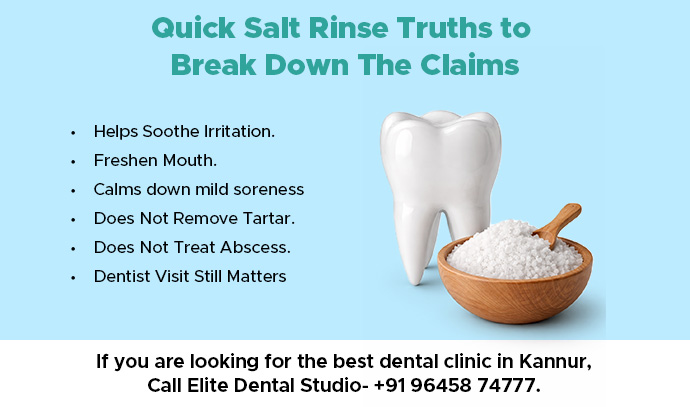
- The gums feel less irritated for a while.
- The mouth feels fresher.
- Mild soreness feels calmer after rinsing.
That is real, and it is why salt water keeps showing up in home advice. The myth starts when relief gets mistaken for a cure by the best dental clinic in Kannur. A rinse can reduce irritation, but it cannot remove hardened tartar, or fill a cavity.
What Dental Problems Can Salt Help With?
Salt-water rinses help soothe inflamed gums, minor mouth sores, and irritation, especially as a short-term routine. It works best as a helper, not as a main treatment. Here are situations where it can make sense.
Gum Irritation And Mild Swelling
If your gums feel a bit puffy or tender, a warm salt-water rinse can feel soothing. Some dental clinic in Kannur also suggest salt rinses have anti-inflammatory effects in certain gum healing contexts. This does not remove tartar, but it can reduce discomfort while you plan proper cleaning.
Mouth Ulcers And Small Cuts
If you accidentally bite your cheek or get a small sore, a gentle rinse can keep the area cleaner and reduce irritation.
Braces Soreness
When braces or aligners rub the cheeks, salt water can calm the tissue. It is not a fix for sharp edges, but it helps you get through the first few days.
After-Food Irritation And Bad Taste
After spicy or very sticky foods, rinsing can wash away residue and make your mouth feel fresher. After trying home rinses for a week many people search for the dentist in Kannur as the real issue did not go away.
What Can Salt Not Fix, Even If It Feels Better?
Salt cannot remove plaque or tartar, reverse cavities, or treat abscess infections. Pain can be reduced even when the cause stays. For example, a cavity can stop hurting for a few days, then come back worse. Salt water may calm the area, but it does not repair the tooth.
Tartar is a hardened plaque. You cannot rinse it away, even with strong salt water. You need professional cleaning to remove it safely.
Why Cavities Need Treatment?
A cavity is tooth damaged. It needs a filling or other treatment by the best dental clinic in Kannur. to stop it from progressing. Rinses cannot rebuild the lost structure.
Why Does Abscess Needs Dental Care?
An abscess is an infection pocket. Rinsing might reduce bad taste for a while, but it will not remove the infection source. If you keep rinsing and the issue keeps returning, that is your sign to book a check at a dental clinic in Kannur and get the real diagnosis.
How To Use A Salt-Water Rinse Safely?
Use mild warm salt water, swish gently, and avoid overuse or strong concentration that can irritate tissues. Discover the truth how salt keep dental problems away as a lot of people go wrong here by making it too salty. Strong mixes can sting and irritate the mouth.
Simple Steps to Use Salt Water
- Mix half a teaspoon of salt in a glass of warm water.
- Swish gently for 20 to 30 seconds, then spit it out.
- For short-term comfort, 2 to 3 times a day is enough for a few days.
- Do not make it an all-day habit for weeks.
Who Should Be Careful?
- People with dry mouths who already feel burning.
- People with ulcers that sting badly.
- Kids who might swallow the rinse.
- Anyone with high blood pressure who is advised to limit salt intake
Is Salt Better Than Mouthwash For Daily Use?
Salt-water can be a gentle option for short-term soothing, while mouthwash choice depends on your condition and dentist advice. Salt water and mouthwash do different jobs. Salt water mainly helps with comfort and gentle cleansing. Some mouthwashes target plaque bacteria and gum inflammation more directly.
| Option | What It Helps With? | What It Cannot Replace? |
|---|---|---|
| Salt-Water Rinse | Short-term soothing, freshness | Brushing, flossing, scaling |
| Dentist-Advised Mouthwash | Gum inflammation control in specific cases | Cleaning between teeth, cavity treatment |
Precautions And Risk Involved In Salt Use
Salt rinses are safe for most people when mild and short-term, but strong mixes and daily overuse can irritate the mouth. Keep these precautions in mind:
- Do not use very strong salt water, it can burn tissues and worsen ulcers.
- Do not scrub teeth with salt. It can scratch surfaces and irritate gums.
- Do not use salt water to delay treatment for swelling, pus, or toothache.
- Do not let kids rinse without supervision.
Salt water is a helper habit. It should never become the reason you postpone treatment.
When Should You Stop Home Remedies And See A Dentist?
See a dentist if pain, swelling, bleeding, bad breath, or ulcers keep returning or last beyond 10 to 14 days. Here are the red flags that mean you should stop experimenting and get checked:
- Severe toothache
- Swelling on the face or gums.
- Bleeding gums daily.
- Loose tooth feeling or tenderness while chewing.
- Ulcers that stay more than two weeks.
At this stage, home rinses can waste time. The fastest way forward is a proper exam, an X-ray if needed, and a clear plan.
Book Elite Dental Studio In Kannur For Gum And Tooth Checks
If salt rinses are not enough, Elite Dental Studio can identify the real cause and give a treatment plan that prevents repeat problems.
When patients come in after trying salt water for days, they want two things. A real diagnosis and a simple plan. Elite Dental Studio offers a complete top-class armamentarium and modern pain-management technology to keep care comfortable.
Book an evaluation, Call: +91 96458 74777.
FAQs
Does salt-water rinse remove plaque?
Salt water rinse can wash away debris and soothe your gums, but it does not remove plaque.
Can salt cure gum disease?
Salt water reduces irritation for short-term, but gum disease involves tartar that needs professional cleaning.
How often can I rinse with salt water safely?
Most people can use a mild rinse 2 to 3 times a day for a few days. Avoid long-term daily use unless your dentist advises it.
Can kids use salt-water rinse?
Older kids who can spit properly can use a mild rinse under parents supervision. Avoid it for toddlers.
Can I replace toothpaste with salt?
Toothpaste with fluoride supports enamel and cavity protection, which salt does not do.
Have Dental Problem : Call us
CALICUT: +91 9745 072 555,
KOCHI: +91 9567 124 888
KANNUR: +91 9645874777
COIMBATORE: +91 9633694999
or make an Appointment
Take a smiling selfie and we'll Simulate your new smile See What Invisalign treatment could do for you!