





Why Do My Teeth Hurt When I Have A Cold? Causes & Relief Explained
A cold can block your nose, your head feels heavy, and teeth start aching. For some people, it also brings an aching feeling in the teeth, especially the upper back teeth. That is when many patients end up asking: why do my teeth hurt when I have a cold?
The reason is sinus pressure. The upper back teeth sit close to the sinuses, so inflammation and congestion can create a dull, spreading ache that feels like tooth pain. At the same time, a cold can also make an existing dental issue feel more noticeable.
At Elite Dental Studio, patients can get a clearer dental evaluation when tooth pain feels confusing or does not settle as expected. They help decide whether the cause is sinus-related or not, and guide the right next step.
This blog breaks down the common reasons, the safest relief steps you can do today, and a simple way to decide when you should get a dental check at the best dental clinic in Calicut.
Why Do Teeth Hurt During A Cold ?
Teeth can hurt during a cold because sinus inflammation and pressure can trigger referred pain, and being sick can also worsen existing tooth sensitivity. Your upper back teeth and sinuses live close to each other. When your sinuses swell and fill with pressure, your brain can read that pressure as tooth pain. That is why the ache feels “all over” the upper teeth instead of one single tooth.
A cold can also change your habits. You mouth-breathe. You drink less water. Your mouth dries out. That dryness can make sensitive teeth feel worse for a few days.
The Most Common Causes of Teeth Pain In Cold
The most common teeth pain causes are sinus pressure, congestion-related mouth breathing, clenching, and sensitivity from existing dental issues.
Mouth Breathing And Dry Mouth
When your nose blocks, you breathe through your mouth. Thus, dry air and lower saliva can increase sensitivity. That is why brushing can sting more when you are sick.
Clenching Or Grinding When You Feel Unwell
Some people clench more during sleep when they feel congested or stressed. Elite Dental Studio also discusses winter-related tooth pain and lists factors like sinus issues and grinding as contributors.
A Hidden Dental Issue That Becomes Obvious
A cold does not cause cavities, but it can make you notice a deep filling that starts leaking, or a cracked tooth that reacts to pressure.
If you keep thinking about the best dental clinic in Kochi for a quick check, this is one of the big reasons to book. You want to rule out a real tooth problem before you assume it is only sinus pressure.
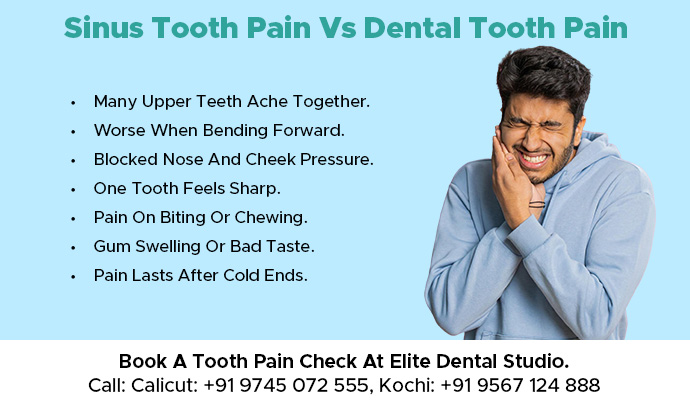
How Do You Know If It Is Sinus Tooth Pain Or A Real Tooth Problem?
Sinus tooth pain feels like a dull ache across several upper teeth, while a true tooth problem feels sharp and focused on one tooth. Here is an easy self-check you can do at home.
Signs It Is More Likely Sinus-Related
- The ache affects multiple upper teeth.
- You feel cheek pressure and blocked nose at the same time.
- Pain feels worse when you bend forward or move your head.
- The pain improves as congestion improves.
Signs It Is More Likely Dental
- One tooth hurts more than the others.
- Pain increases when you bite or chew on that tooth.
- You get sharp sensitivity to hot or cold.
- You notice gum swelling, a bad taste, or a pimple-like bump on the gum.
If you are unsure, do not force a diagnosis at home. A simple exam and X-ray can settle it quickly. That is where the best dentist in Kochi or a local clinic can help you avoid days of guessing.
What Can You Do Today For Quick Relief?
You can reduce sinus pressure, protect sensitive teeth, and calm inflammation with a few safe steps while your cold settles. These steps are safe for most people.
Step 1: Reduce Sinus Pressure
- Use steam inhalation or a warm shower to loosen congestion.
- Use saline nasal rinse if it suits you.
- Rest with your head slightly elevated.
Step 2: Stay Hydrated
- Sip warm fluids through the day.
- Avoid too much caffeine if it dries you out.
- Hydration helps saliva do its job.
Step 3: Eat And Drink Gently
- Avoid extreme hot or cold foods if teeth feel sensitive.
- Stick to softer foods if chewing triggers pain.
Step 4: Keep Brushing, But Do It Gently
- Use a soft brush.
- Brush slowly.
- Do not scrub hard thinking it will “clean better.”
Step 5: Use Basic Pain Relief If Needed
Use over-the-counter pain relief as appropriate for you. If you have medical conditions, follow your physician’s advice.
If these steps reduce pain within a day or two, it points toward sinus-related discomfort. If pain keeps rising, you should not wait too long and book the best dental clinic in Calicut.
What Daily Management Helps Until The Cold Clears?
Daily management is about letting the cold settle while preventing dryness, sensitivity, and pressure from building up again. Patients love a simple routine, so here is the suggestion:
Morning
- Warm water or warm tea.
- Gentle brushing and rinse.
- Steam once if congestion is heavy.
Afternoon
- Hydrate regularly.
- Avoid snacking all day.
Night
- Brush gently before going to bed.
- Keep a humidifier.
- Sleep with an elevated head if sinus pressure is heavy.
This routine cannot fix a cavity or an abscess, but it will reduce cold-related discomfort.
When Should You Stop Waiting And See A Dentist?
You should see the best dentist in Kochi if tooth pain is severe, one-sided, lasts beyond the cold, or comes with swelling or a bad taste. Use these red flags to make a decision:
- Pain lasts more than 7- 10 days.
- Pain focuses on a single tooth.
- Gum swelling or pus.
- Night tooth pain.
- Pain returns every time you catch a cold.
What Will A Dentist Check For Cold-Related Tooth Pain?
A dentist checks your teeth, gums, bites, and takes an X-ray when needed to confirm whether your pain is sinus-related or dental. This is what a proper visit includes:
- Tapping and pressure tests to find the exact tooth.
- Gum check for swelling and infection signs.
- Sensitivity checks if needed.
- X-ray to rule out deep decay, cracks, or infection.
This is the most direct way to answer why do my teeth hurt when i have a cold as many people assume it is sinus pain, then later discover a cracked filling or deep cavity. An exam removes that uncertainty.
Book A Tooth Pain Check At Elite Dental Studio In Calicut Or Kochi
Tooth pain during a cold is not always a cavity, but it should not be dismissed either. When the pain spreads across several upper teeth, it may be linked to sinus pressure. But when one tooth hurts more, chewing becomes painful, or the discomfort continues even after the cold improves, the cause may be dental and worth checking properly.
At Elite Dental Studio, a dental exam can help confirm whether the pain is sinus-related or coming from a tooth, gum, crack, or existing restoration. With access to comprehensive dental care in Calicut and Kochi, patients can get a clearer diagnosis and the right next step without having to keep guessing at home. To book a tooth pain consultation at the best dental clinic in Kochi, call:
Calicut: +91 9745 072 555
Kochi: +91 9567 124 888
FAQs
Can A Cold Cause Tooth Pain Even If I Have No Cavities?
Yes. Sinus inflammation can refer to pain in the upper back teeth, and congestion can increase sensitivity.
Why Do My Upper Back Teeth Hurt More Than The Front Teeth?
Upper back teeth sit closer to the sinuses. Sinusitis can commonly cause pain in those upper rear teeth.
How Long Should Cold-Related Tooth Pain Last?
If it is sinus-related, it often improves as congestion improves. If pain lasts beyond 7 to 10 days or worsens, get a dental check.
What If Only One Tooth Hurts During My Cold?
One-tooth pain can point to a dental issue like decay, a crack, or gum infection. Book an exam to rule that out.
Have Dental Problem : Call us
CALICUT: +91 9745 072 555,
KOCHI: +91 9567 124 888
KANNUR: +91 9645874777
COIMBATORE: +91 9633694999
or make an Appointment
Take a smiling selfie and we'll Simulate your new smile See What Invisalign treatment could do for you!